

Software Development Contracts & Service Level Agreements: A Guide to Securing Tech Partnerships
In the software development industry, brilliant ideas and elegant code are rarely enough to guarantee a project's success. The relationship between clients and development vendors is frequently tested by misaligned expectations, scope creep, and post-launch system performance issues. This is precisely where Software Development Contracts and Service Level Agreements (SLAs) become essential, serving as the legal and technical backbone that keeps projects on track.
Understanding the Role of Software Development Contracts
A software development contract is the primary legal document governing the dynamics between a client and a development team. Beyond simply listing costs and deadlines, this document defines the Statement of Work (SOW), payment structures (whether Fixed Price or Time & Materials), and intellectual property (IP) rights for the created codebase. Without a well-structured contract, the risk of disputes over license ownership, mismatched feature expectations, or delivery delays increases significantly. A solid agreement provides clear legal certainty and a secure framework for both parties.
SLAs: Ensuring Quality and Reliability Post-Launch
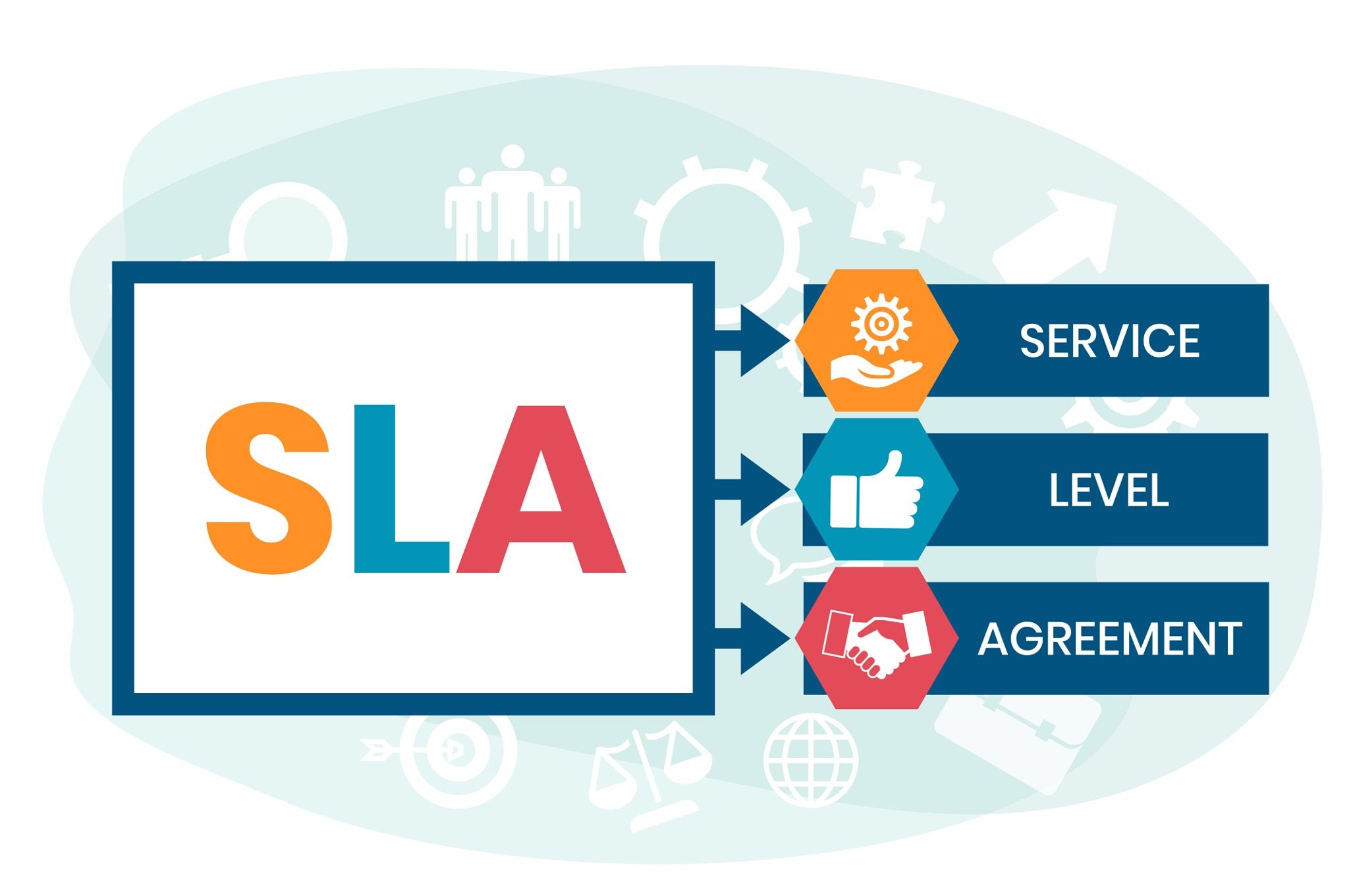
While the main contract regulates the build process, the Service Level Agreement (SLA) sets the standard for quality assurance once the application goes live. An SLA defines measurable performance metrics that the vendor must maintain, such as minimum system uptime (e.g., 99.9%), server response times, and target resolution times (Mean Time to Resolve) when bugs or outages occur. A clear SLA protects the business from financial losses caused by technical disruptions while ensuring the development team provides responsive, accountable maintenance.
Aligning Legal and Technical Foundations for Project Success
Combining a flexible development contract with a precise SLA is the best strategy to mitigate risk in IT projects. In today's Agile environment, contracts must remain dynamic enough to accommodate shifting business requirements without compromising budget limits. Simultaneously, setting realistic SLA targets prevents unrealistic client expectations and provides a fair benchmark for vendor performance. By integrating both components from the outset, organizations can build long-term tech partnerships rooted in results, transparency, and efficiency.